
JunFeng motor focused on vehicle development and core components for smart and new energy vehicles. Product development, innovative business models with the Internet + thinking way, explore new paths for the development of smart and new energy vehicles .
Summer 'Electric Car Summer Resort Activity'
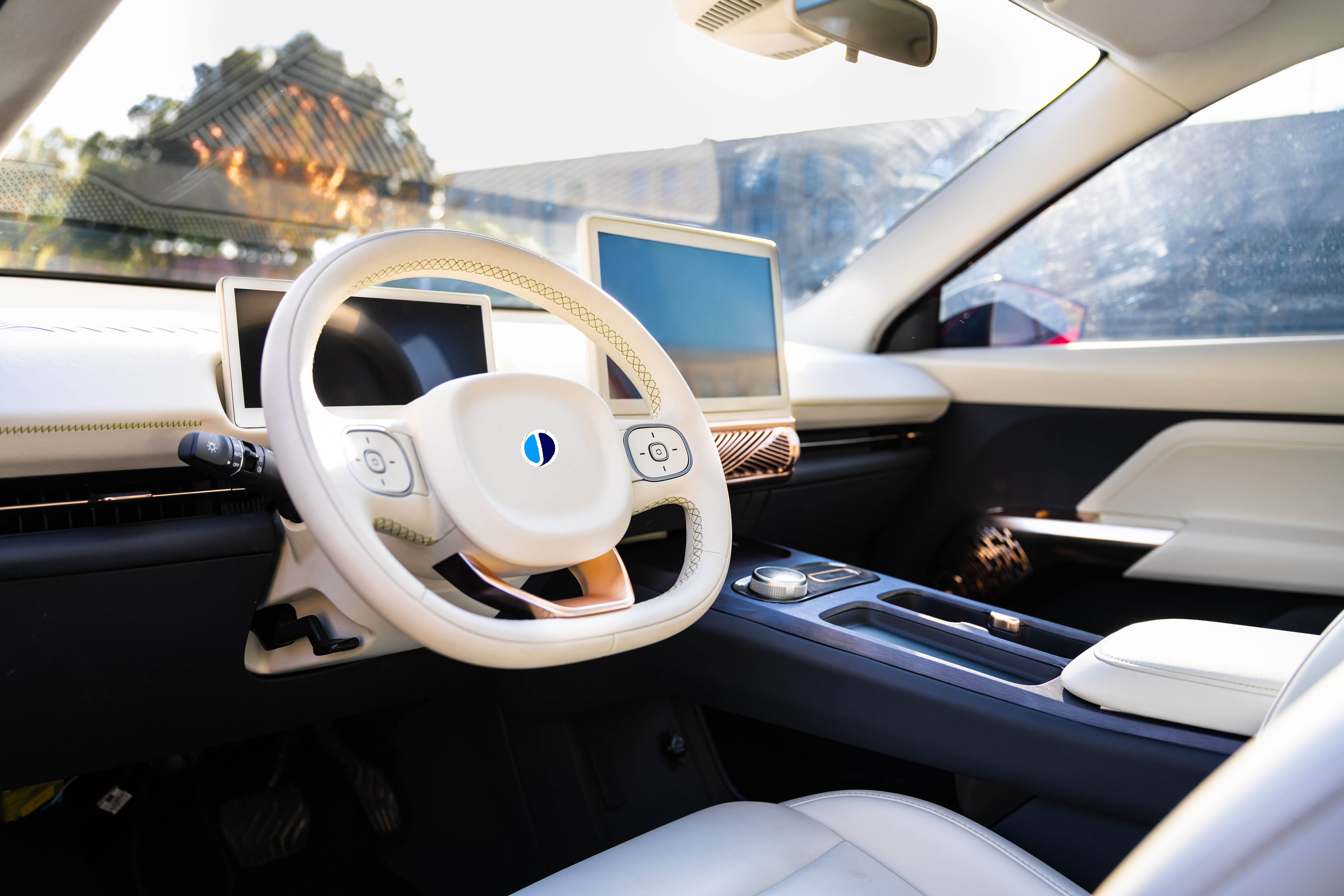
Summer 'Electric Car Summer Resort Activity'
Summer is coming: Junfeng Company held a special after-sales meeting to inspect and deploy the summer "electric vehicle summer activity", reminding users to use electric vehicles correctly. Junfeng Company has issued a special car reminder to care for every user and every beloved car.
The core of driving electric vehicles in summer is to protect the batteries, pay attention to charging safety, and master some skills to fight against high temperature and rainstorm.
Battery maintenance: Do not let the battery suffer from heatstroke
High temperature is the biggest enemy of batteries, and the following habits can effectively extend their lifespan:
Parking to avoid sunlight: Try to park in an underground garage or a shaded area. If you can only park outdoors, you can use a sunshade to not only lower the temperature inside the car (up to 20 ℃), but also indirectly protect the battery under the chassis.
Electricity management: It is recommended to keep the electricity level between 20% and 80% for daily commuting to avoid long-term parking in a fully charged or depleted state. It can be fully charged and discharged once a month to help calibrate the battery management system.
Long distance planning: Plan the route and charging stations along the way before traveling, leave sufficient battery redundancy, and avoid driving on low battery for a long time.
Charging safety: choose the right timing and environment
Summer charging, timing and environment selection are more important than speed:
Avoid high temperature periods: Try to avoid charging immediately after being exposed to direct sunlight at noon, as the battery temperature is high and charging will increase the heat dissipation burden. It is recommended to let the car sit for 30 minutes to 1 hour and wait for the battery to cool down before charging.
Priority slow charging: Although fast charging is convenient, in summer, slow charging is more battery friendly. If fast charging is necessary, pay more attention to operating in a cool and shady place.
Be cautious during thunderstorms: Do not charge outdoors during thunderstorms, as it may damage the battery or even cause accidents. When charging on ordinary rainy days, remember to check if the charging port and nozzle are dry and clean first. It is also recommended not to stay in the car for a long time while charging, and not to close the windows or turn on the air conditioning to rest, in order to prevent the inability to escape in time in case of danger.
Check after charging: After charging, promptly remove the gun and tightly cover the dust cover of the charging port to prevent water ingress and oxidation.
Range improvement: skillful use of air conditioning and driving habits
Turning on air conditioning in summer can significantly affect battery life. You can try these energy-saving methods:
Tips for using air conditioning: First open the window to ventilate and release hot air when getting on the car, then turn on the air conditioning. It is recommended to set the temperature at 24-26 ℃ and use more internal circulation to significantly reduce energy consumption. If conditions permit, use the mobile app to remotely turn on the air conditioning before departure to cool down the cabin and battery in advance, which is very comfortable to use.
Driving habits: Maintain smooth driving, avoid sudden acceleration and braking, and reduce the loss caused by sudden high current discharge of the battery. When driving at high speeds, try to maintain an economical speed (such as 80-100km/h), as wind resistance will increase sharply with speed and energy consumption will also increase significantly.
Other safety details
Tire inspection: In summer, the road surface temperature is high, and tire pressure is prone to rise. Regular inspections should be carried out and inflated according to the standard value. If the tire pressure is too low, it is more likely to cause a tire blowout.
Clean up the articles in the car: Never leave lighters, perfume, power packs, reading glasses and other articles in the exposed car. They are easy to explode or ignite when heated, which is very dangerous.
Driving through water: When encountering flooded roads, it is best to detour and not forcefully pass through areas where the water depth exceeds half a tire (about 15 centimeters) to prevent the battery from short circuiting due to water ingress
If an electric car is submerged in water
When electric vehicles are submerged in water, safety comes first and the car is secondary. Although tram batteries have a high waterproof rating, the actual situation is complex, so don't take it lightly just because you think 'tram waterproofing is good'.
The core idea is: risk assessment → decisive risk avoidance → professional aftermath management.
Step 1: Quickly assess risks and decide whether to proceed
There are varying degrees of risks associated with vehicles being submerged in water, and a quick assessment can be made based on the water level
Water level level level
Risk Disclosure
Suggestions for Response
Safe water level
(≤ 15cm, approximately one-third of the tire height)
It basically does not affect the high-voltage system, but attention should be paid to chassis splashing.
Can pass smoothly at low speeds (5-10km/h), check the chassis and dashboard after passing.
Warning water level
(15-35cm, close to the chassis)
The battery pack may be partially soaked. If the vehicle has a bottom or aging seal, there is a risk of water ingress.
Try to avoid passing through as much as possible. If it is necessary to wade through water, it should be done at a constant speed and slowly, and immediately sent for inspection after passing.
Dangerous water level
(>35cm, exceeding 2/3 of the tire or submerging the chassis)
The battery pack may be completely soaked. Even with IP67 waterproofing, it only ensures short-term safety (such as 30 minutes at a depth of 1 meter).
Absolutely prohibit passage, immediately turn around or detour.
Experts remind that pure electric cars do not have engine intake and exhaust ports, and theoretically have better water wading ability than gasoline cars, but this does not mean that they can be driven like boats. In addition, extended range or hybrid models still have engines, and the water wading depth should refer to the standards for fuel vehicles.
Step 2: If soaked in water or trapped, immediately perform these steps
If the judgment is incorrect and the car has entered deep water or the water level is rapidly rising, please act in the following order:
Primary task: Immediately cut off power: If possible, press the P gear and engine stop button to completely turn off the vehicle's power. This is the most critical step in cutting off the risk of high voltage electricity.
If the vehicle stalls: Do not restart it again: Do not attempt to restart the vehicle in water, as this may cause a serious short circuit in the high-voltage system or even pose a danger.
If the car door cannot be opened: decisively break the window to escape: accumulated water will cause huge external water pressure, making it difficult to open the car door. Don't hesitate at this moment, use a safety hammer or headrest metal plug to forcefully hit the four corners of the side window (the front windshield is difficult to break) to escape.
Personnel evacuation: first go to a safe place and then seek help: people are always the first priority. First, make sure that you and your passengers have moved to a safe area with higher terrain and away from stagnant water, and then call the rescue and insurance numbers.
Attention: Electric vehicles are powered by direct current, and if there is a leakage, it is very dangerous.
Step 3: Professional handling afterwards
After the vehicle is rescued from the water, the handling method is also crucial:
Never start, never charge: After towing the vehicle to a safe location, never attempt to unlock, start, or charge it. The high-pressure system may have hidden faults due to water ingress, making it very dangerous for non professionals to come into contact with it.
Timely contact professional inspection: Contact the manufacturer's after-sales service or professional maintenance agency to conduct comprehensive insulation and safety testing on the entire vehicle, especially the battery pack, high-voltage wiring harness, and charging interface. Even if the dashboard does not report an error, we cannot take it lightly, as the corrosion of internal components after water ingress may pose a long-term risk of spontaneous combustion.
Take photos for evidence collection, contact insurance: report to the insurance company as soon as possible and clearly explain the situation. Remember to take clear photos of the vehicle's location, license plate, and flooding height when taking photos, as these are important criteria for claims settlement.
JoyFun Automobile Company
JunFeng motor focused on vehicle development and core components for smart and new energy vehicles. Product development, innovative business models with the Internet + thinking way, explore new paths for the development of smart and new energy vehicles .
Our Locations
Economic and Technological Development Zone,Wuhan,Hubei, PRCGive Us A Call
400 886 9608Help Desk
cc_junfeng@163.com

WALLPAPER



Copyright © JoyFunAuto 2026 . All right reserved. Powerd by E3IS